
When the work gets harder, the team is what holds.
People say it in the meeting, not the corridor afterwards. Decisions stay made. The team backs each other when the pressure's on.
That's what changes when a team takes the time to see how it really works, and agrees what it'll do differently. It can start with a free pulse check, about six minutes for your read on the team.
Free · about six minutes · for me, or for our team
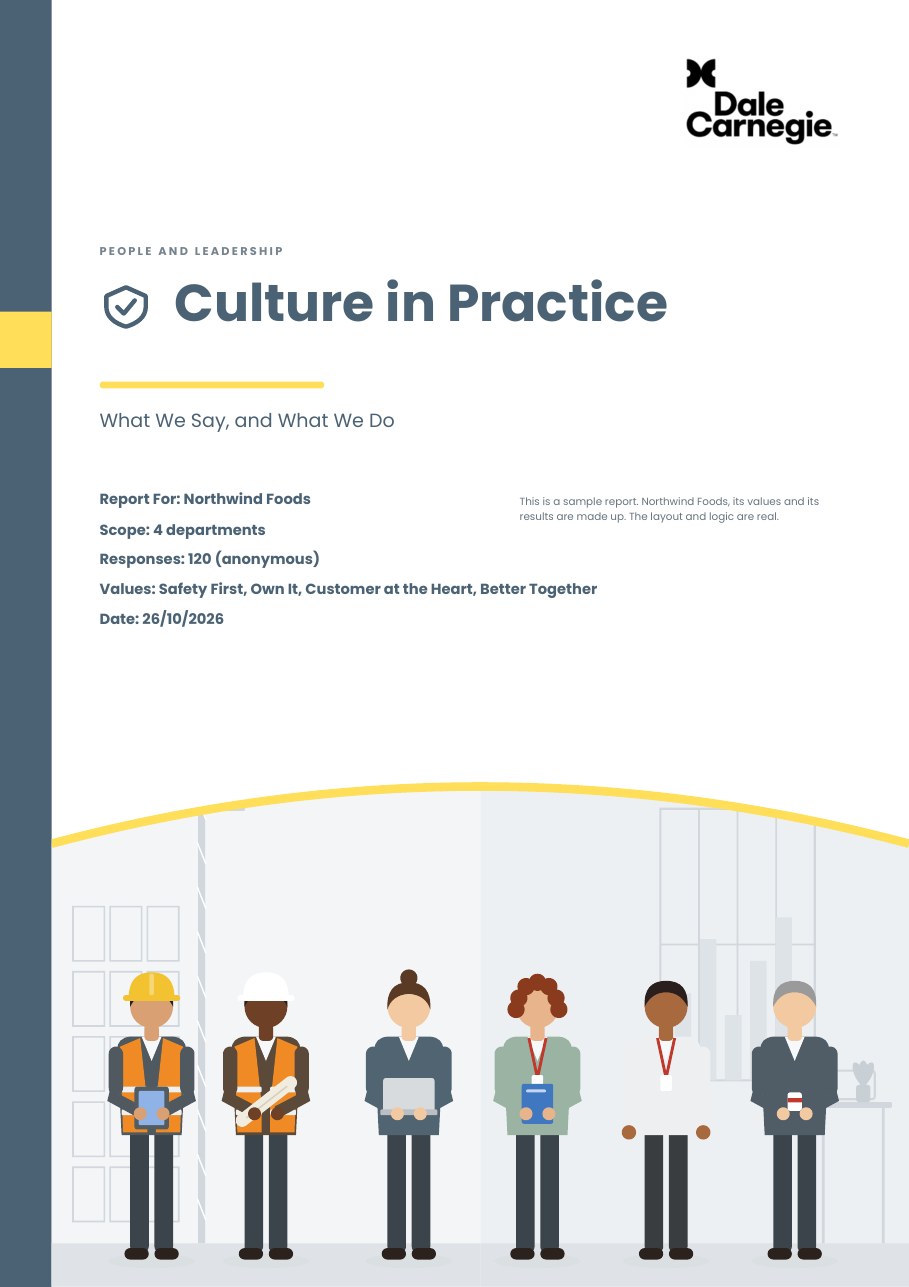
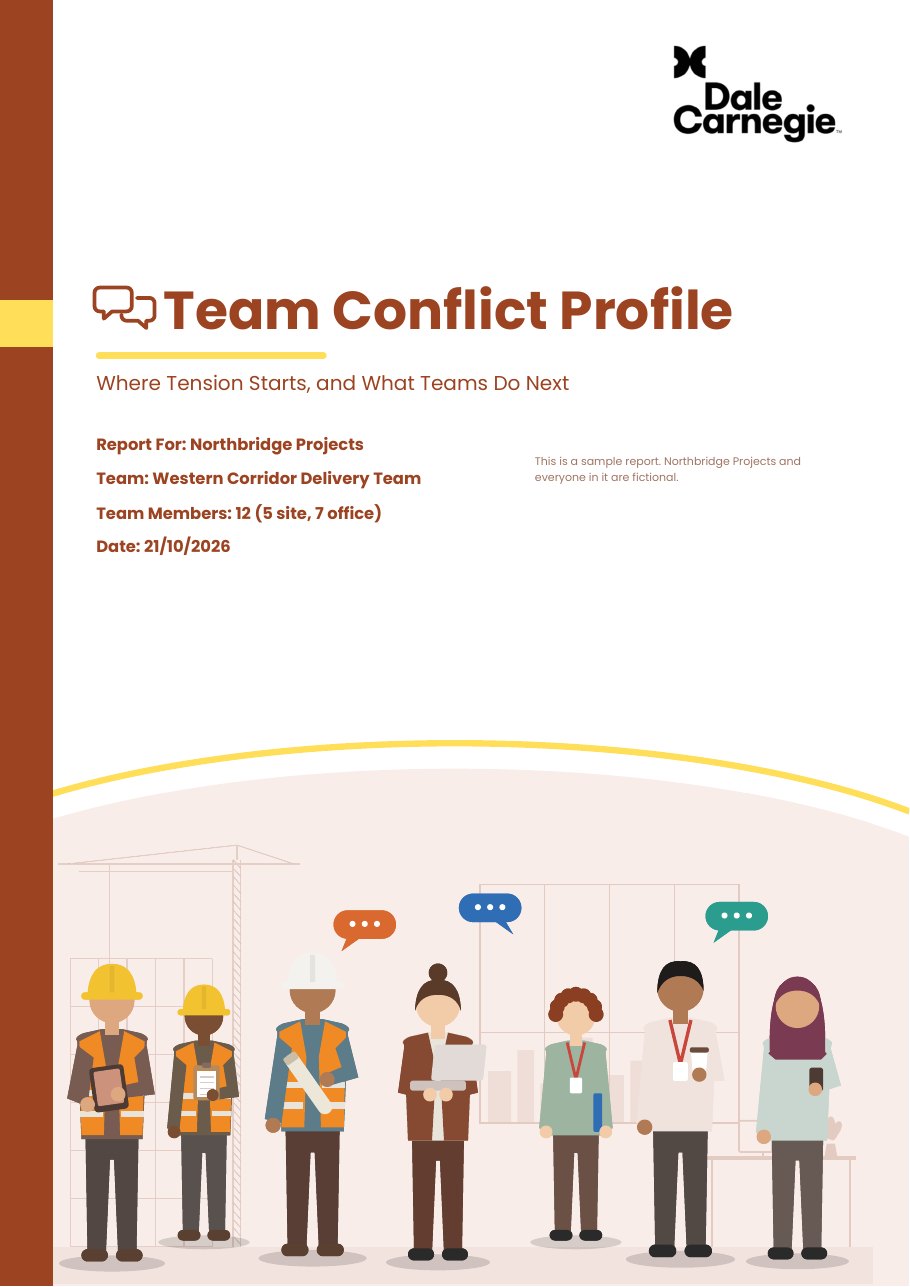

























Teams in engineering, construction and infrastructure, mining and resources, financial services and insurance, pharmaceuticals, technology, professional services and government.
It's usually one of these that brings a leader to us
Pick the one closest to yours to see what's often going on, and where we'd start.
A change that's on its way
Something big is coming, and we want the team ready before it lands.
AfterThe team's ready before it lands, not three months after.
See how we helpAI arriving faster than the habits
New tools, old ways of working, and the benefits slower to show than they should be.
AfterThe tools get used, because the habits around them change too.
See how we helpA new or restructured team
Good people who don't yet know how each other works.
AfterA team sooner, rather than a group of good individuals.
See how we helpHard conversations that aren't happening
The real conversation happens in the corridor after the meeting, or not at all.
AfterThe real conversation happens in the room, where it can be settled.
See how we helpDifferences pulling the team apart
Styles, cultures and generations read as attitude, when they could be a strength.
AfterDifferences get used as strengths, instead of read as attitude.
See how we helpWhat people notice in the weeks after
Not what happens in the room. What the people and leaders in the wider business see change once everyone's back at work.
- People say what they think in the room, in the right way
- Disagreements get settled, not reopened afterwards
- Everyone knows who's doing what, and by when
- Fewer decisions coming back for a second go
- Less time refereeing, more time leading
- Problems raised early, while they're still small
- Fewer people issues escalating
- Progress the leader can show at day 90
- A team that handles the next change better than the last
Often it's the "what next" after the engagement survey. The survey shows where a team is strong and where it has room to grow. This helps the team build on the strengths and work on the rest.
Does one of these sound like your team?
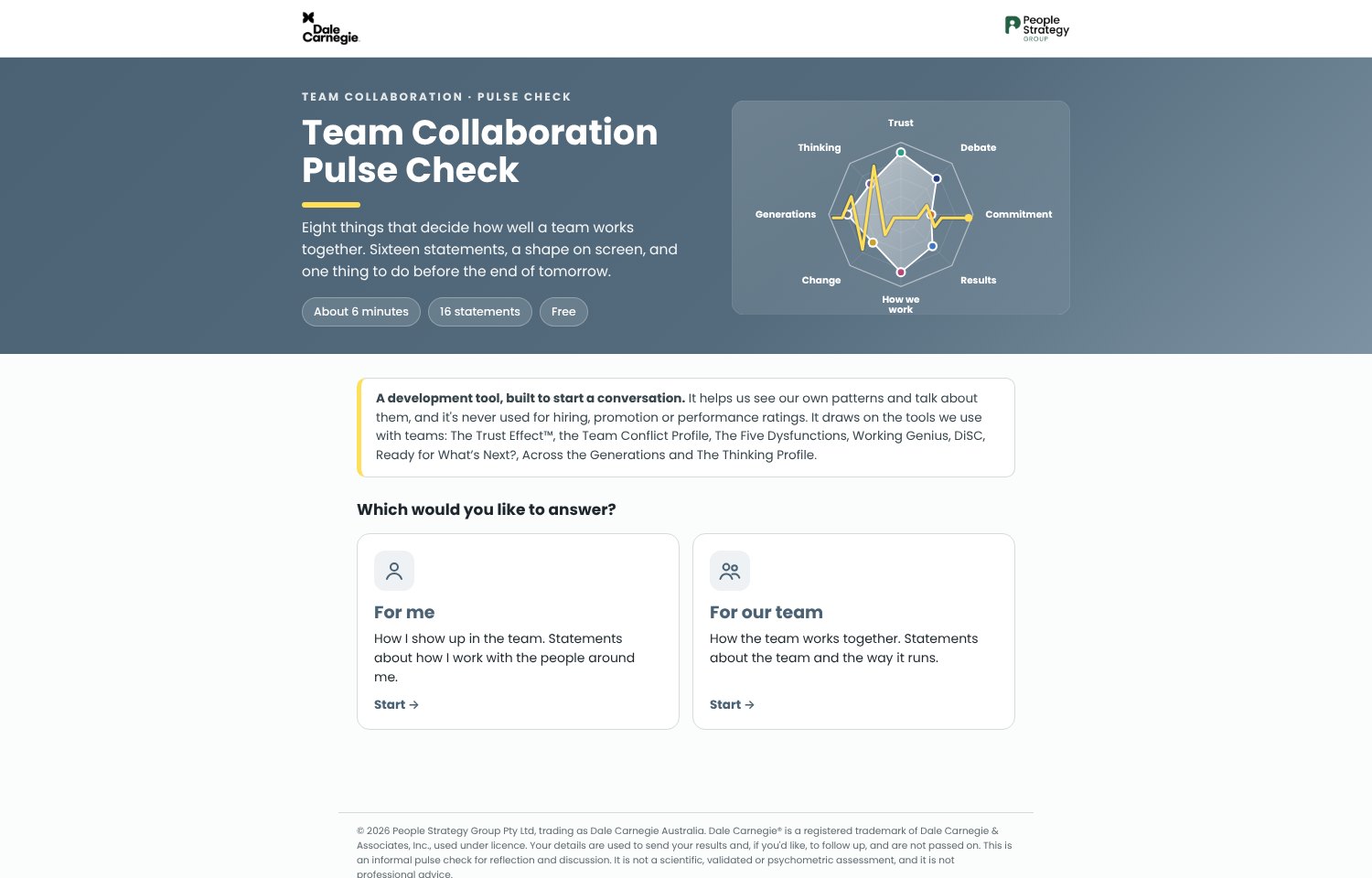
The pulse check names the pattern in the team's answers, and gives one thing to do about it before the end of tomorrow.
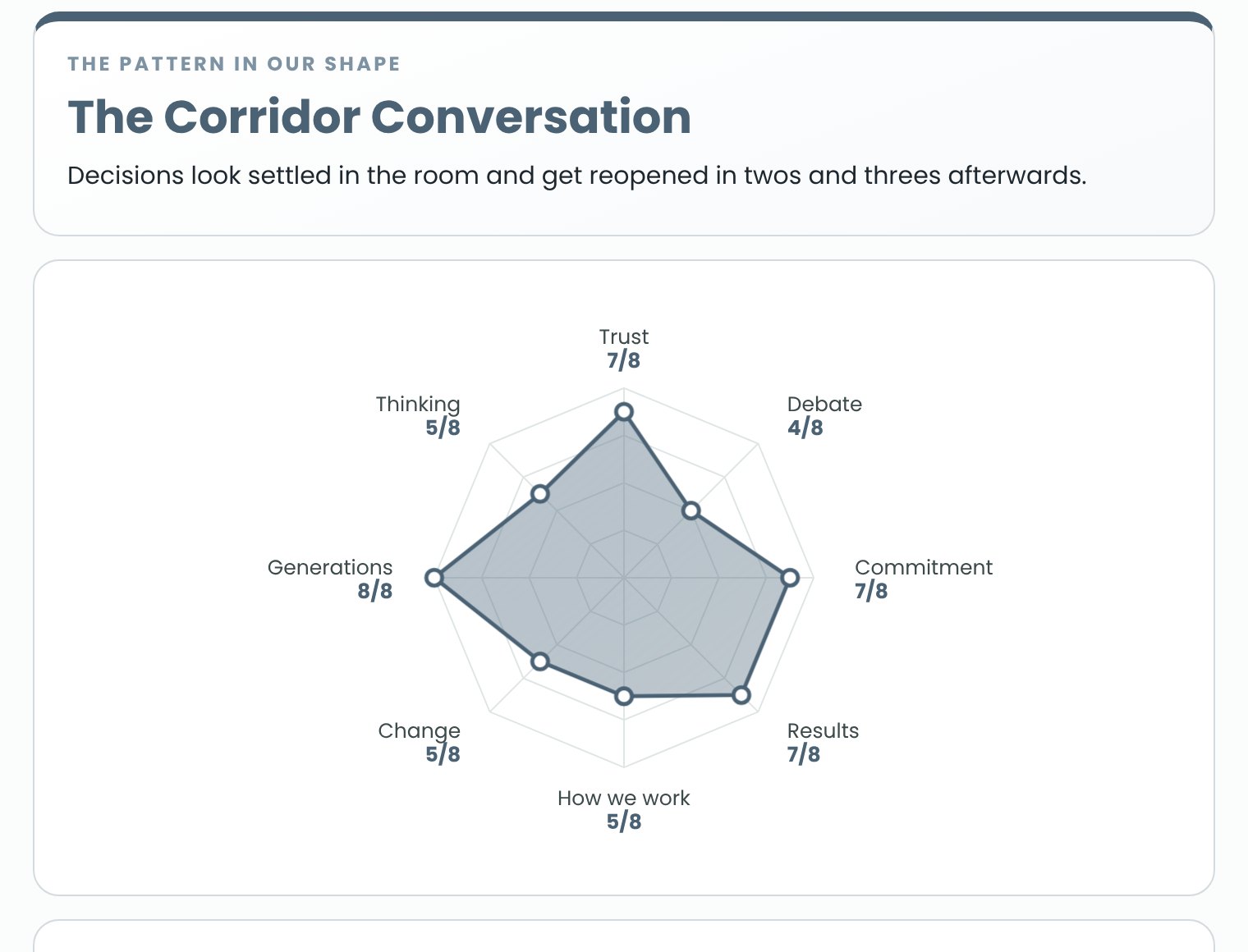
The Corridor Conversation
Decisions look settled in the room and get reopened in twos and threes afterwards.
Nodding, Not Owning
Meetings end with heads nodding, and the follow-up quietly falls back to the manager.
Polite, Not Yet Safe
People get on, and still weigh up the cost before saying "I got that wrong" or asking for a hand.
Heads Down Under Pressure
When things shift, the team keeps going but stops talking, and the why gets dropped.
And there are more: fourteen patterns in all, from "Firing on All Eight" to "Stretched Thin". The free pulse check shows which one is closest to your team.
The Team Collaboration Pulse Check
Sixteen statements across eight areas. Your read on the team, the pattern in it, and the three headlines worth working on first. Then a 30-minute chat with us about what it shows, and the same check again at around day 90 so everyone can see what's moved. No cost, and no obligation.
Or start with a more focused one, also free
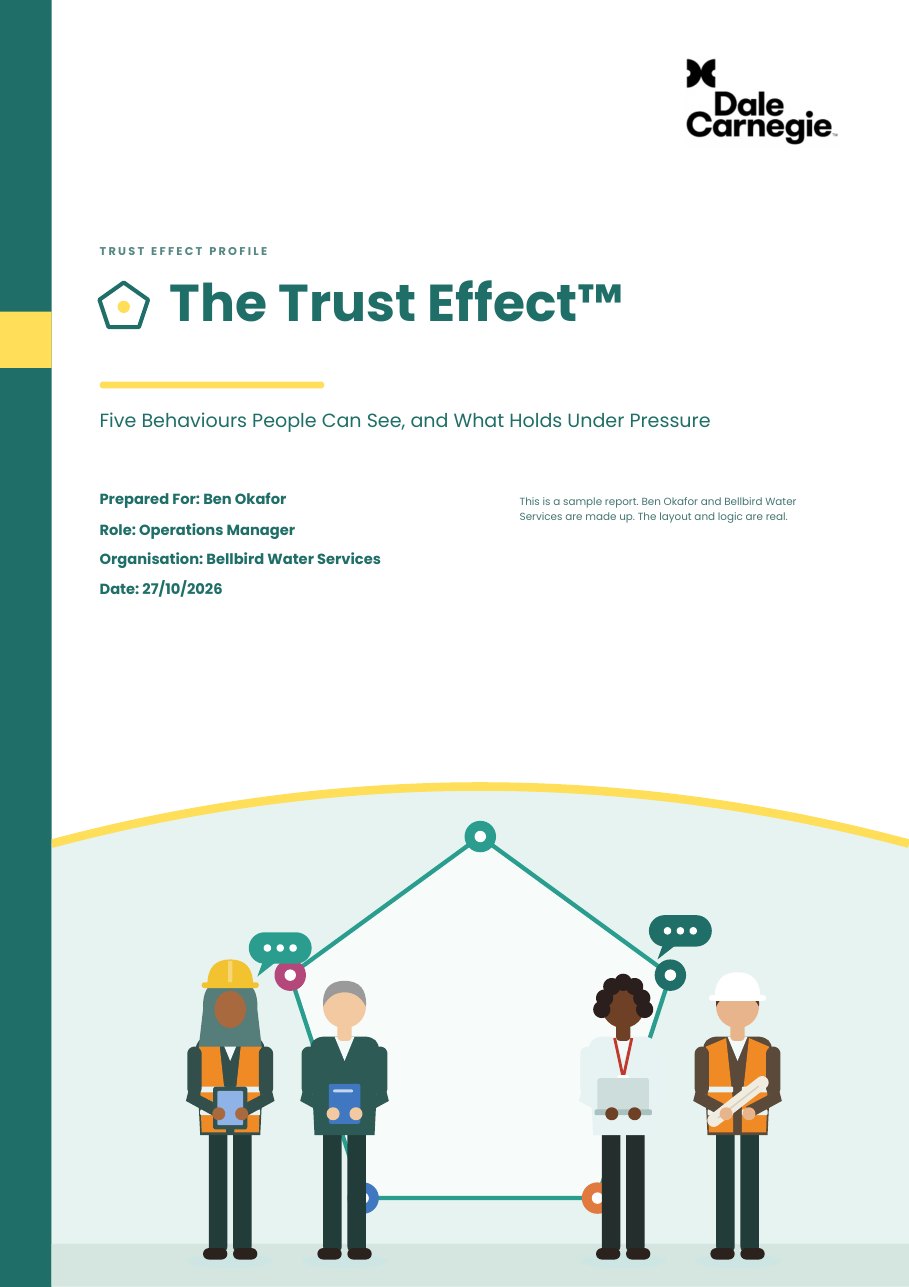
- Trust Pulse Checkfive Cs in about four minutes
- Difficult Conversationswhere tension starts in the team
- Change Readinessfor a person, a leader or a team
- Multigenerational Teamhow the team works across ages
- Cultural Intelligenceworking across cultures
- Critical Thinkinghow the team tests ideas
What's behind the pattern, and what to do about it
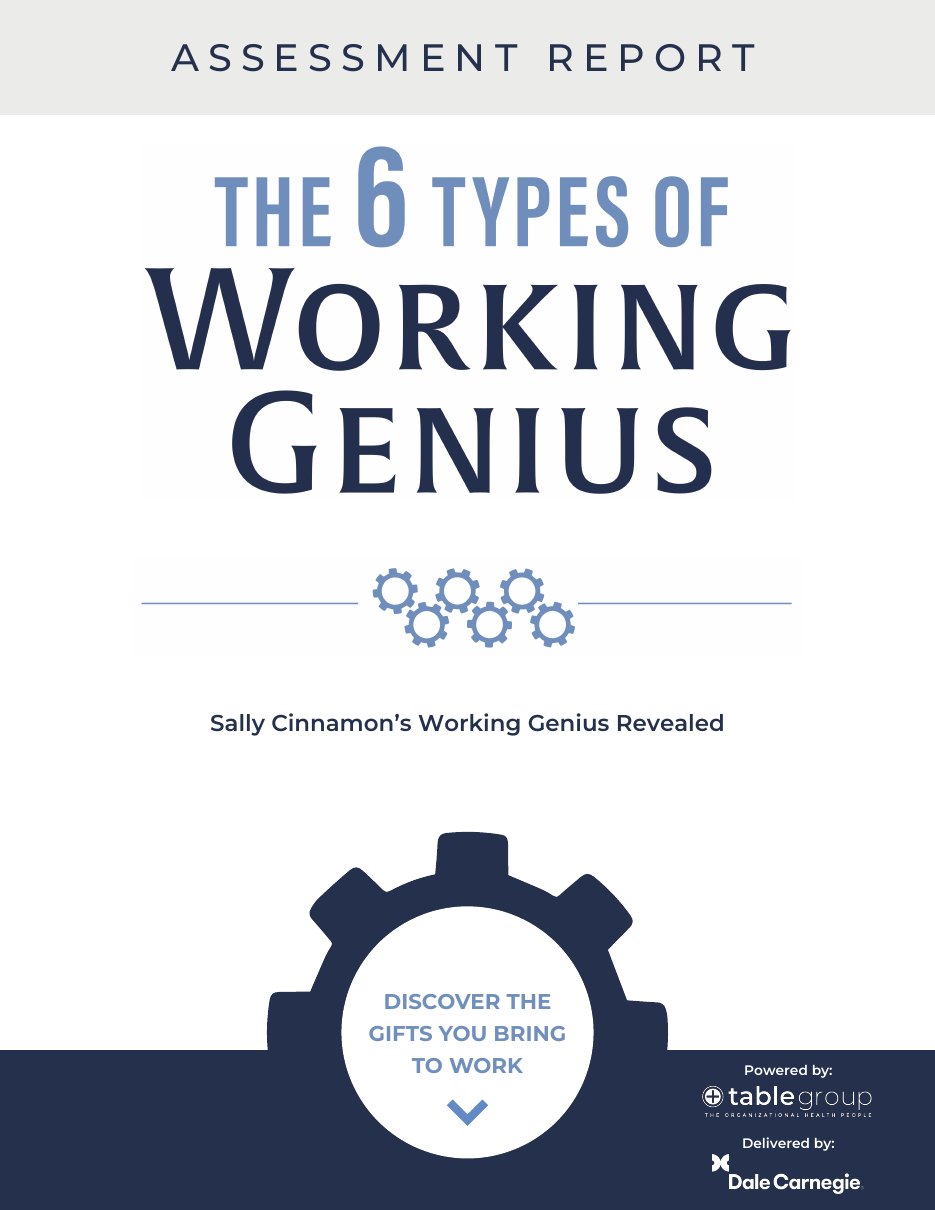
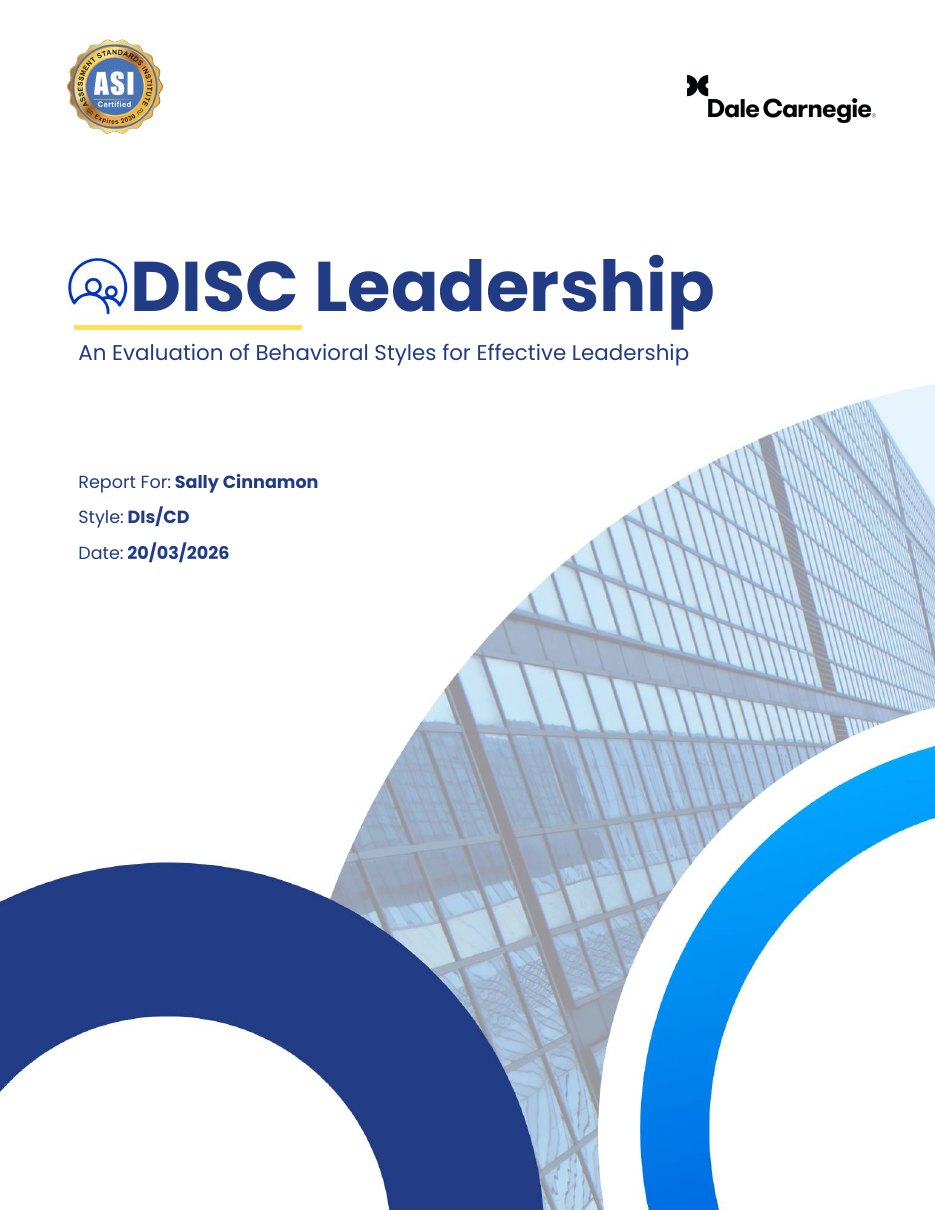
The pulse check is the free, no-risk way to start, and it gives the team a starting point. The assessments go deeper, with a report for each person and a picture of the whole team. Each one is a development tool, built to help a team see its own patterns.
Not sure which one fits?
Ask us for a sample report from any of these, or we can talk it through with you.
Start small. Go further when it's working.
Start small and keep the risk low. Ready-made, or designed around your team. Most start with the free pulse check and one session, and decide on more once they've seen what it does.
The pulse check
Sixteen statements, for me or for our team. Then a 30-minute chat with us about what it shows.
What you get- Where the team is strong, in eight areas
- The three headlines worth working on first
- A summary you can send to the leader
One team, one focus
Built around what the pulse check shows. Practical and hands-on, sleeves rolled up, on the team's real work rather than theory.
What changes- The team names the one thing getting in the way
- Agreements in writing within two working days
- Everyone leaves with one thing to do before the end of tomorrow
A team year
An assessment to start, four quarterly sessions, the pulse check each quarter, and one-to-ones with the leader.
What changes- The habits stick, because someone keeps checking
- Progress the leader can see every quarter
- A team that handles the next change better
Several teams, several sites, or another country? Online or in the room, across Australia and through the Dale Carnegie network overseas. Talk to us about something bigger.
The same quality, wherever the team is
Dale Carnegie has been helping people work better together for more than a century, and in Australia for more than sixty years. A team in Sydney, a site in Perth and an office in London can all get the same program, run the same way.

Making the case inside the business
What the team gets, and how we'll know
What happens, how much of the team's time it takes, what changes afterwards and how it's measured at day 90. Written to be forwarded as it is.
Download the summary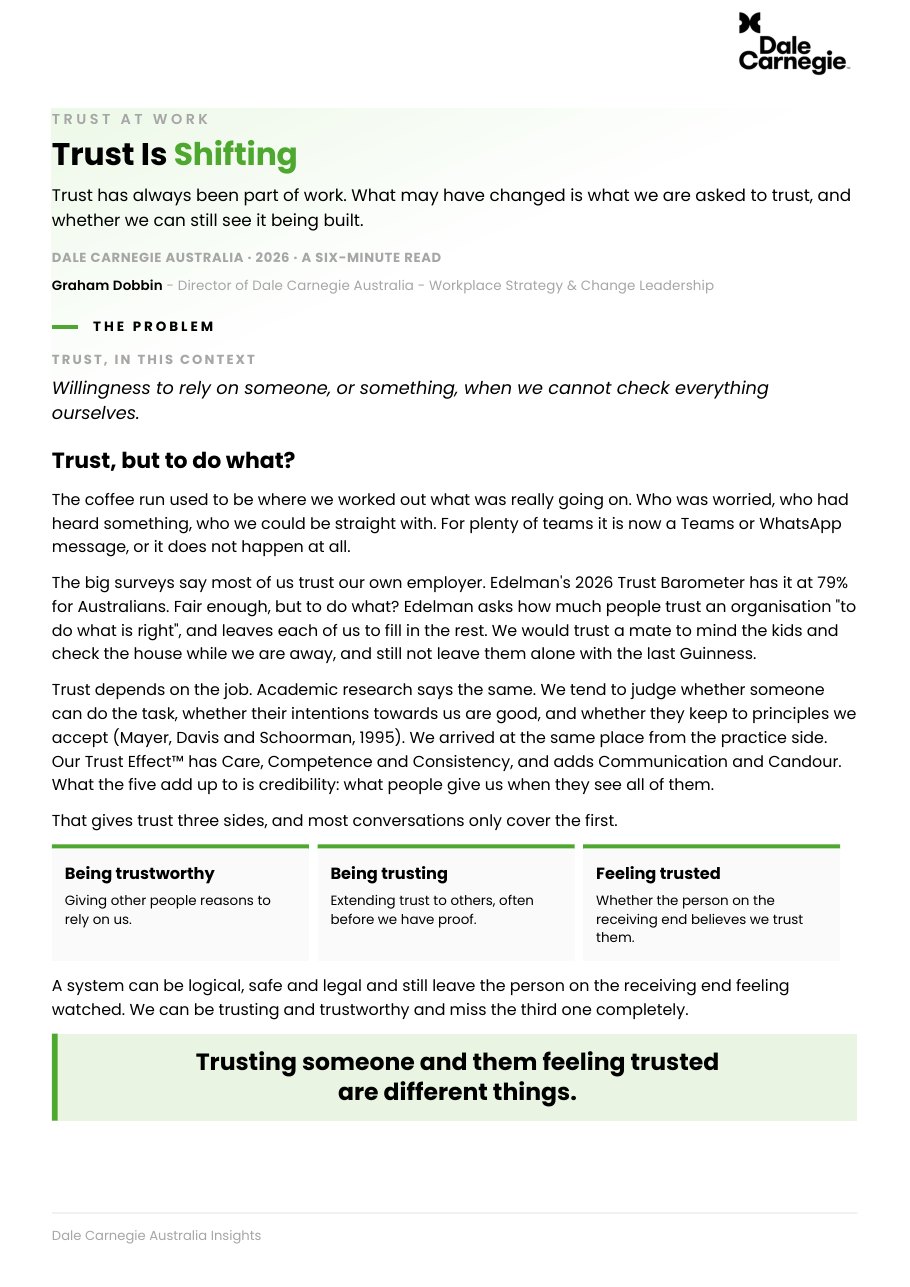
Trust Is Shifting
What people at work trust now, what they don't, and what a team can do about it. A short read to share with a leader before the pulse check.
Download the paperMost people who get this far already have a team in mind
Tell us a little about it. We'll come back within two working days with a suggested place to start.
02 8319 2368
info@dalecarnegietraining.com.au
The questions we hear most
How long does the pulse check take?
About six minutes. Sixteen statements, each scored one to four, then a few details so we can send the results. It's one person's read on the team, so it's a quick way to start the conversation.
Does the whole team need to do it?
No. One person's read is enough to start. When we want the whole team's view, we use one of the assessments, and everyone takes part.
What does it cost?
The pulse check and the first chat are free. After that it depends on the team and the format, and we'll give you a clear price within two working days.
Who sees the results?
Each person sees their own, and the team sees the team's picture. We agree who sees what before anyone starts.
Do we have to sign up for a full program?
No. One session stands on its own. Plenty of teams start there and decide on more once they've seen what it does. We'll talk through our approach and how it works on the first chat.
What if the team isn't keen?
We get it. In every group there are always some people who are less keen to begin with. We meet the team where they are, and the session is practical and hands-on, worked on the team's real situations rather than theory. Our clients tend to stay with us, which says a lot about how people engage once they're in the room.
Do you work with small teams? What about big ones?
Both. We work with teams from five people upwards, and with programs that run across thousands of people. It works best with a team that works together day to day, so larger groups are split into teams.
Can you help a manager who's inherited a team?
Yes, and it's one of the most common reasons we're called. A new leader, a team with its own history, and not much time to get it right. We help the leader and the team get on the same page early, before old habits harden.
My team won't speak up. Where do we start?
It's far from uncommon. We'd start with the free pulse check, which shows whether it's about safety, debate or something else, then a 30-minute chat about what it shows. The session that follows is built around getting the real conversation into the room.
Is this just team building?
No. A team-building day is about having a good time together. This is about the team's real work: what's getting in the way, and what changes the next morning. There's usually a good laugh along the way, though.
Online, in person, or across several sites?
Any of those. Online, in the room or a mix, across Australia and through the Dale Carnegie network overseas. From this office we're currently running projects in the US, the Middle East, Europe, Africa and Asia.
How does this fit with our engagement survey?
It sits alongside it, not instead of it. The survey shows where a team is strong and where it has room to grow. This is the part that acts on it: the team works out why, and agrees what changes. The more we can see, the better, so we'll use your survey results to help shape the work.
How will we know it worked?
You should see small changes almost straight away, and we want those to happen. The real aim is habits that last. So we check in at around 60 to 90 days, look more closely at what's changed, and tweak anything that needs it.